

Birth Injury Case Evaluation
Parents of children with birth injuries that could be prevented face staggering medical bills, difficult therapies and permanent disability. Medical malpractice claims can alleviate financial burdens and offer justice.
To be successful in a claim lawyers must prove that the hospital or doctor have violated the accepted standards of care during the labor and delivery. This is often accomplished through extensive review of medical records and expert witness testimony.
Cerebral Palsy
Cerebral Palsy is permanent motor impairment caused by injuries to the developing central nervous system, which can occur in utero, at the time of birth (perinatal) or early infancy. It affects a broad range of body movements and can be mild, moderate, or severe in intensity. Its symptoms can vary by age, but the condition isn't progressive.
In contrast to other conditions, it isn't a condition that can be tested. However it is important to conduct a thorough and thorough examination can aid medical professionals in determining whether or the child's problem is caused by cerebral palsy. This includes a full neurologic and mobility evaluation.
The examinations will focus on the child's balance and muscle tone, as well as their abilities to move and their reflexes. A musculoskeletal exam can detect hip dislocations, scoliosis and contractures. A speech and language assessment will also show a child's intellectual development as well as their capacity to make speech sounds.
Neuroimaging, a type of imaging that allows doctors to examine the brain in greater detail is commonly used for diagnosing Cerebral Palsy. It is a non-invasive method of assessing the extent of brain damage. It is not able to help doctors to predict the impact of the injury on a child’s symptoms.
Some children may not be diagnosed with cerebral palsy until they are several years old as the symptoms can vary. The classification of a disorder in terms of severity, topographical location, and muscle tone can be useful in determining a child's level of impairment and influencing the treatment.
Physical and occupational therapy are the most effective treatment options for Cerebral Palsy. These therapies can improve the mobility of a child and reduce the risk of joint deformities like scoliosis. In addition, speech therapy and the use of adaptive equipment can assist with daily activities and enable them to be more social with family members and other. There are a variety of financial aid options available depending on the specific circumstances that lead to a child's condition. This includes charity groups and foundations that can alleviate the burden of the cost of a child's treatment and care.
Brachial Plexus Injury
A brachial plexus injury is the result of an injury to the five nerves that originate from the spinal cord in the neck and transmit signals from the spinal cord to the shoulder, arm and hand. Each side of the body has a brachial plexus. Some infants suffering from brachial plexus injuries recover without treatment, but most will benefit from physical and occupational therapy. A smaller proportion of infants may require surgery to get good results.
A doctor can diagnose a baby with brachial plexus injuries based on the medical history and physical examination. A doctor can also order special imaging tests like an MRI or CT scan, or nerve conduction studies, although these tests are not as reliable in babies. Doctors can also assess the strength and movement of the child's muscles in their arms by doing gentle range of motion exercises which aids in tracking recovery over time.
The symptoms of brachial plexus injuries can vary based on how severe the injury is and the nerves that have been affected. Symptoms include a weak arm muscles, a reduced range of motion and decreased sensation in the hand. The symptoms usually affect one side of the body, however often both sides are equally affected.
Neonatal brachial plexus syphilis (NBPP) is the most frequent cause of birth injuries that affects the brachial plexus however it could also result from other causes. Babies who are overweight and have a breech posture or who are pulled forcibly during birth could be at a higher risk of a brachial plexus injury. This type of injury is also common in athletes who play contact sports, such as football, and from blunt trauma.
NBPP is a condition that can be diagnosed early, usually within six weeks of birth. The majority of children will heal without intervention, however those who do not improve in a month's time need to be assessed by an expert team. The team typically consists of an orthopedic surgeon for children, a physiatrist, and physical therapy.
Erb's Palsy
The brachial plexus (pronounced brake-ee-al) is a collection of nerves that run from the spinal cord to the shoulder, and through the arm until the hand. If this group of nerves is injured during delivery, it can cause weakness or paralysis in the affected arm. The most commonly reported form of this injury is called Erb's palsy. It is caused by significant stretching or tear to the upper brachial nerves the birth.
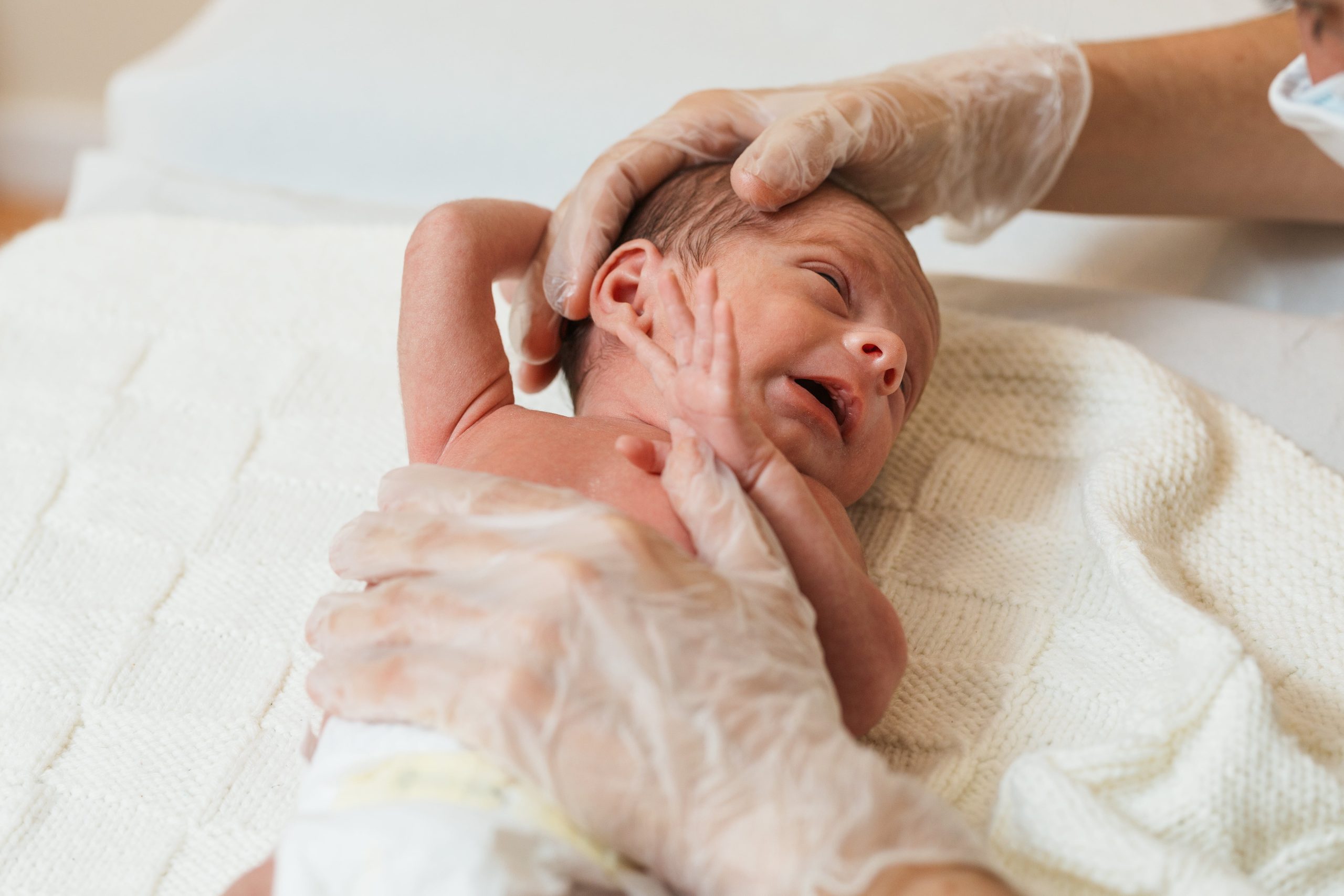
A doctor can diagnose Erb palsy by conducting a physical exam of the infant's hand. The health professional will look for a lack of movement in the affected arm, a weak wrist and lack of Moro reflex (the infant's involuntary response to the loss of head support). The health care provider may also recommend an imaging or nerve test such as an X ray or an electromyogram, or ultrasound or study of nerve conduction.
In many cases, Erb's palsy can occur when an inexperienced clinician applies too much lateral tension to the infant during delivery with forceps. This type of traction can be minimized by having a shorter second stage of labor, or by placing the mother on her back during a portion of the delivery. A doctor can also in reducing the risk of injury by delivering by C-section.
Other brachial plexus injuries are possible in addition to Erb's Palsy. Klumpke palsy is a more severe form of this condition that causes injury to the lower brachial plexus nerves. This kind of injury is usually described as a "waiter's tip" position because the limb hangs to the side and is rotated medially, pronated, flexed and extended at the wrist.
If your child is diagnosed with any of these ailments it is essential to talk with a medical malpractice attorney right away. Beth has more than 18 years of experience in specialized experience in labor and delivery and can assist in determining whether your child's doctor has committed a mistake that could have caused these preventable injuries.
Hypoxic Ischemic Encephalopathy
Hypoxic Ischemic Encephalopathy (HIE), also called hypoxic ischemic brain damage, is a condition that occurs when a birth issue reduces blood and oxygen supply to the newborn. HIE is an extremely serious brain condition that could lead to permanent brain damage. The effects of HIE can vary from mild to extreme, and usually start within a few days after birth. HIE is among the many ailments that fall under the larger category of birth-related injuries called neonatal encephalopathy (NE).
HIE can be caused due to complications during labor and birth. This includes excessive bleeding in the mother’s blood vessels as well as forceps delivery, prolonged labor and bleeding excessively. It's possible that a baby may have an underlying issue like low birth weight, which could result in HIE.
To diagnose HIE in infants, doctors will look at the infant's APGAR scores as well as any signs of neurological impairment. A low APGAR could indicate the need for immediate medical care. Doctors can also conduct blood tests to measure acid build-up in the umbilical cord which is a sign that a baby is suffering from an oxygen deficit or a decreased flow of blood to the brain.
If newborn injury lawyer www.accidentinjurylawyers.claims is suspected to have HIE the doctors usually attempt to treat it with a procedure known as therapeutic hypothermia. During this treatment the infant is placed in a cool blanket and given medication to aid in sleep. During cooling, doctors will monitor the infant's heart rate, body temperature, breathing and brain activity.
After the baby has fully re-warmed, a magnetic resonance image (MRI) will be taken. MRIs are best for identifying HIE and its injury pattern. The results of an MRI may reveal an injury time-frame, which is helpful in determining whether the child's symptoms are caused by HIE.
If you are diagnosed with HIE babies must be closely monitored for the rest of their lives. They'll visit a neonatologist and neurologist, and could receive physical, speech and occupational therapy to help them deal with their symptoms. The goal is to get these children as healthy as they can and help them achieve their full potential.